
Remote Landscapes
From Calandula Falls and the central highlands to the Namib Desert coastline and Iona National Park, Angola offers jungle, beaches, mountains, desert and wilderness in one long expedition.
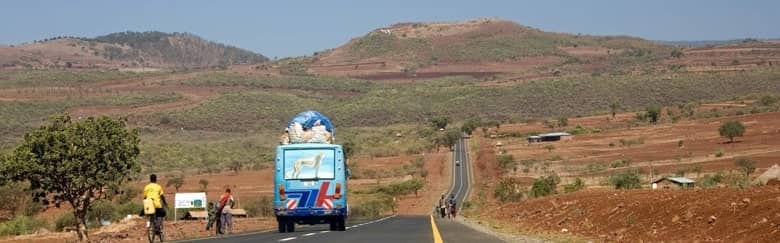
Plan a serious Angola overland journey with clear route advice, border crossing guidance, vehicle paperwork, eVisa planning, fuel strategy, camping options, police checkpoint etiquette and remote travel safety tips.
Angola has rapidly become one of Africa's most exciting overlanding destinations. After years of restrictive entry requirements, simplified visa policies and improving road infrastructure have made the country far more accessible to international self-drive travelers.
From Calandula Falls and the central highlands to the Namib Desert coastline and Iona National Park, Angola offers jungle, beaches, mountains, desert and wilderness in one long expedition.
Unlike many famous safari destinations, Angola remains relatively uncrowded. It is attractive for travelers who want off-the-beaten-path exploration, wild camping and long-distance self-drive routes.
Angola is rewarding, but it remains a destination for travelers comfortable with long distances, limited services, remote tracks, language barriers, checkpoints and changing road conditions.
Choose your Angola overland route according to experience, vehicle setup, season and available travel time. Distances are long and GPS travel times are often too optimistic.
Recommended for: first-time Angola visitors.
Main highlights include Luanda, Lobito, Benguela, Namibe, Atlantic Ocean viewpoints, fishing villages and coastal dunes. Road conditions are generally good, with long sections of sealed highway. Some degraded stretches remain, especially between Benguela and Namibe, and seasonal river crossings can become difficult after heavy rain.
This is Angola's premier 4x4 adventure, covering Lubango, Serra da Leba Pass, Tundavala Gap, Iona National Park, the Namib Desert, Cunene River and remote Himba communities.
Expect deep sand, rocky tracks, limited fuel, no mobile signal and long distances without settlements. A properly equipped 4WD vehicle is essential.
Ideal for travelers interested in scenery and culture. Main destinations include Luanda, N'Dalatando, Calandula Falls, Pedras Negras and Malanje Province.
Road quality is generally better than in more remote regions, although potholes and damaged sections remain common outside major towns.
Northern Angola remains one of the country's most demanding overland regions. Routes between Uíge, Mbanza Kongo and Luvo Border can be extremely slow due to rough roads, erosion, mud during the rainy season and roadworks.
Allow extra time and carry sufficient water, food and fuel.
Popular crossings include Santa Clara and Katwitwi. These are among the busiest and most commonly used entry points for overlanders entering southern Angola.
Caripande is widely regarded by overlanders as one of the smoother eastern crossings, with less congestion and easier access to eastern Angola.
Luvo/Lufu connects Angola with western DRC. Processing times can be longer than at southern borders, particularly during busy periods.
This is one of the most important points for Angola overlanders. Free tourist entry is helpful for simple tourism trips, but it is not always the right route for cross-border expeditions.
| Travel situation | Best visa advice | Why it matters |
|---|---|---|
| Tourist from a visa-free listed country entering Angola once | Tourist visa-free entry may be suitable for up to 30 days. | It is tourism-only and should be treated as single entry. |
| Tourist leaving Angola to visit Namibia, Zambia, DRC or another country, then returning | Multiple-entry eVisa is better. | Free tourist entry is not the right planning tool for repeated border movements. |
| Tourist from a nationality not covered by exemption | Apply for Angola eVisa or the correct visa before travel. | Do not arrive at a remote border without the right approval. |
| Business meeting, site visit, trade or professional travel | Apply in advance for business visa or business eVisa. | Business travel is not covered by tourist visa-free entry. |
| Uncertain nationality or mixed travel purpose | Check the visa route before departure. | Border corrections can be difficult during overland trips. |
The checker now supports all nationalities. It does not guess blindly: it separates passports listed in Angola's tourist visa-free decree from passports that should prepare an eVisa, pre-visa, visa on arrival pre-approval or embassy visa before travel.
For tourism-only overland trips, listed passport holders may use Angola's tourist exemption for up to 30 days per entry and 90 days per year. For practical border planning, treat this as a single-entry tourism route.
If the selected nationality is not on the tourist visa-free list, the checker recommends applying before travel through the Angola eVisa, pre-visa or embassy route. Do not arrive at a remote land border without printed approval.
Business travel is separate from tourism. Business visitors of every nationality should apply in advance for the correct business visa or business eVisa before entering Angola.
Fuel availability is reliable in major cities but becomes limited in remote regions. For southern Angola, plan for a driving range of approximately 900 km or more, carry extra fuel safely in approved containers and refuel whenever fuel is available.
Never assume the next filling station has fuel in stock.
Expect modern dual carriageways, good paved highways, gravel roads, corrugated tracks, deep sand, flood-damaged roads, seasonal river crossings and rocky mountain passes. Travel times are often much longer than GPS estimates.
Accommodation options include hotels in major cities, guesthouses, lodges, campsites and remote bush camping where permitted. Many experienced overlanders use offline resources to identify safe overnight locations.
Mobile coverage is generally available in urban areas but limited in remote regions. Use offline GPS maps, iOverlander, Organic Maps, Garmin navigation and paper backup maps. Do not rely only on online navigation.
Checkpoints are common. Remain courteous, keep documents ready, avoid photographing military sites, police checkpoints, border facilities or security personnel, and request an official receipt for any legitimate fine.
Cooler temperatures, easier river crossings and better road conditions make this the best time for Angola overlanding.
Flooded roads, muddy tracks, difficult river crossings and increased travel times are possible. Remote travel needs more caution.
| Trip length | Recommended areas |
|---|---|
| 7 days | Luanda, Calandula Falls and Pedras Negras |
| 10 to 14 days | Coastal Route and Lubango |
| 2 to 3 weeks | Southern Angola and Iona National Park |
| 4+ weeks | Complete Angola overlanding expedition |
Road hazards, animals, unlit vehicles and security risks make night driving a poor choice.
Refuel whenever fuel is available, especially before southern and remote routes.
Carry enough drinking water and food for several days if driving through isolated regions.
Keep cash in local currency for remote areas where cards may not work.
Use offline maps before departure; mobile signal can disappear quickly outside towns.
Tell someone your planned route when traveling through isolated regions.
Confirm border opening hours and document requirements before arrival.
Monitor rain because rivers, mud and erosion can change route conditions quickly.
No. For overland planning, free tourist entry should be treated as single entry and is valid for tourism only, usually up to 30 days per entry. If you plan to leave Angola and return through Angola, use a multiple-entry eVisa or the correct visa route.
Yes. Select your nationality in the checker. If your passport is listed under Angola tourist visa-free policy, the result explains the tourism-only 30-day single-entry route. If your passport is not listed, the result recommends eVisa, pre-visa or embassy visa before overland travel. Business travelers of every nationality must apply in advance.
Yes. Business travelers of all nationalities should apply in advance for the correct business visa or business eVisa before entry. Tourist exemption is not for business meetings, trade, site visits or professional activities.
Many overlanders use Santa Clara or Katwitwi from Namibia. Caripande from Zambia is often considered smoother for eastern access. Luvo/Lufu from DRC can involve longer processing times.
A 4x4 is strongly recommended for southern Angola, Iona National Park, desert tracks and remote routes. Some coastal and central roads can be driven more easily, but conditions change.
Driving at night is not recommended because of animals, pedestrians, unlit vehicles, poor road markings, potholes and security risk in remote areas.